What do head lice look like?

What do head lice look like?

         louselifecycle

Head lice are only about the size of a sesame seed (3-4 mm) when they are fully grown. Their 6 legs end in hook-shaped claws which they use to tightly grasp the hair.

They are transparent. This makes them difficult to detect in the hair. Once they have fed, head lice turn brown-red. They lay their pearly-white eggs close to the scalp. In some cases, you can find dead eggs, which are brownish in colour or empty egg cases, also known as nits, that are white and look a bit like dandruff.

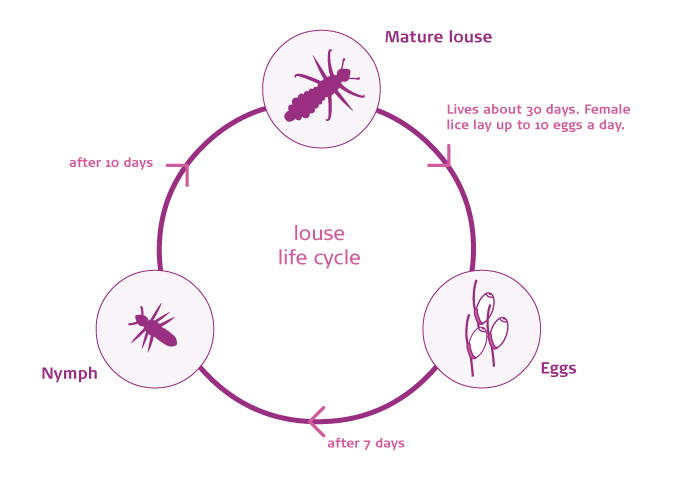
The eggs hatch after 7 days. These ‘baby head lice’ are called nymphs. After 10 days, nymphs become mature adults ready to lay eggs.

Adult head lice live about 30 days. In that time, female head lice can lay 200 to 300 eggs.


How do head lice spread?

How do head lice spread?

Head lice mainly spread through direct head-to-head contact between people. Children come into close contact with each other while playing, which is why they are affected by head lice more than adults.

Head lice can also spread through clothing and objects, such as a scarf, cap, or brush.

You cannot become infested by eggs. Eggs do not move. Only head lice move.

What is the difference between Paranix and products based on insecticides?

What is the difference between Paranix and products based on insecticides?

Unlike insecticide-based products, Paranix’s treatment range does not contain any insecticides and acts in a purely physical manner. Therefore, head lice cannot become resistant to any of its ingredients.

Does Paranix come with any side effects?

Does Paranix come with any side effects?

Possible side effects are limited but may include: eye irritation, itching and irritation around the eyes, flaking of the scalp, contact irritation and redness of the scalp, ears or neck. As a general precaution, we advise pregnant women/women breastfeeding to consult a pharmacist or doctor before using Paranix.

How can I calculate how long the head lice have been in my hair?

How can I calculate how long the head lice have been in my hair?

You can do this by measuring how far the eggs are positioned from the scalp. Eggs are laid near the scalp. Hair grows at about one centimetre a month. Therefore an egg that is situated 2 cm from the scalp was laid about 2 months ago.

Can head lice live outside of the hair?

Can head lice live outside of the hair?

Head lice may be able to live 2 to 3 days outside of the hair in humid conditions, but will then no longer reproduce.

Should I cut my child’s hair if he/she gets head lice?

Should I cut my child’s hair if he/she gets head lice?

No. Head lice live close to the scalp so cutting your child’s hair will not make any difference. The best you can do is to immediately treat your child.

How did my child get head lice? Is this a matter of hygiene?

How did my child get head lice? Is this a matter of hygiene?

Head lice have nothing to do with hygiene. Anyone can get head lice, although they are more common in children. Head lice spread mainly through head-to-head contact or potentially also through the sharing of personal belongings (scarf, cycling helmet, etc.). Young children tend to have closer contact. That is why head lice are commonly spread at primary school. At any one time, most schools will have a few children with active living head lice. Head lice do not discriminate between short or long, or clean or dirty hair.